
5 Common Challenges Doctors Face When Learning GI Endoscopy 101
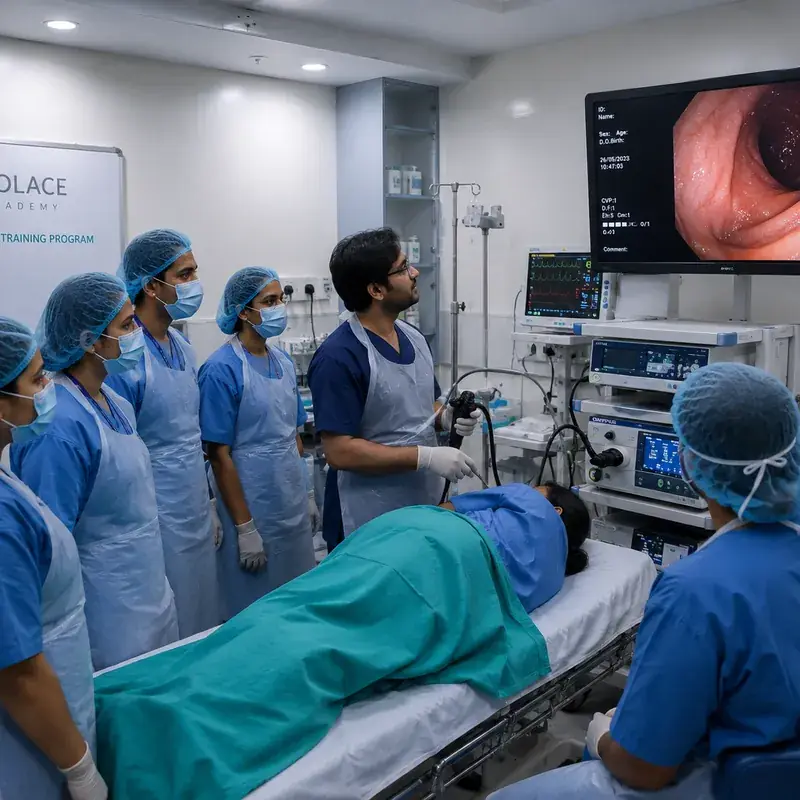
Learning gastrointestinal endoscopy feels awkward at first for almost everyone. You hold a long, flexible tube, watch a screen instead of your hands, and try to steer through a moving, curving organ while a patient is sedated in front of you. That early clumsiness is a normal part of the learning curve.
The five challenges most doctors hit when learning GI endoscopy are scope control and safe navigation, spotting findings while managing mental overload, performing polypectomy safely, preparing for advanced procedures like EUS and ERCP, and getting consistent feedback that shows when independent practice is appropriate. Each one builds on the last, which is why structured supervision matters more than case count alone.
Training in gastroenterology has shifted in recent years. Instead of counting procedures and calling it competence, programs now look at how well a trainee performs specific tasks. That change helps protect patients and gives fellows a clearer path forward.
Understanding these five hurdles helps you set realistic goals, ask better questions of your supervisor, and know what "ready" looks like before you work alone.
A. Building Core Endoscopy Skills
The first two challenges sit at the base of everything else: physically steering the scope and making sense of what appears on the screen. Trainees often report they learn best by doing procedures, though a study of gastroenterology fellows found that only two of five fellowship programs used a formal endoscopic skill assessment tool, and none had an endoscopy curriculum the fellows knew about.
Challenge 1: Developing Steady Scope Control and Safe Navigation
Handling a colonoscope takes weeks of repetition before the movements feel natural. You control tip deflection with dials, rotate the shaft with your body, and push or pull, all while looking at a two-dimensional image of a three-dimensional space.
Upper endoscopy has its own sequence of small wins. Fellows in the Boston-area study described milestones they set for themselves: intubating the esophagus, getting past the pylorus, reaching the second part of the duodenum.
Colonoscopy adds loop formation, patient position changes, and the pressure of reaching the cecum without causing discomfort or injury. Simulators help early on, but most fellows in that study spent a median of only one hour with one.
A practical tip from the endoscopy suite: slow down when the view is red or blurry. Withdrawing slightly and insufflating gently solves more problems than pushing forward.
Challenge 2: Recognizing Findings While Managing Cognitive Load
Seeing a flat polyp is a separate skill from reaching it. Early in training, so much attention goes to steering that little is left for careful inspection behind folds.
Researchers describe this as cognitive load. Procedures with limited visual and tactile information add risk of cognitive overload for learners, which is why trainers often narrate one task at a time.
Endoscopy skills split into three groups that programs track separately: technical (hand movements), cognitive (knowing what you are looking at and what to do next), and integrative (pulling both together with patient care).
B. Learning Therapeutic Techniques Safely
Once you can reach a lesion, the next step is treating it, and treatment carries risks that diagnosis does not. Basic polypectomy sits at the center of this stage because it combines tool handling, tissue judgment, and team coordination in one moment.
Challenge 3: Coordinating Technique, Equipment, and Patient Safety During Polypectomy
Polypectomy means removing a polyp during the procedure, usually with a snare or forceps. It asks you to hold a stable position, judge the polyp's size and shape, choose a technique, and direct a nurse or technician who is operating the snare handle.
That last part surprises many trainees. The endoscopy suite is a team, and differences in personality, communication style, and training backgrounds are common among nurses and fellows working together.
Bleeding and perforation are the main risks. Knowing how to manage a complication is part of the skill, and British guidance notes that endoscopic management of acute gastrointestinal bleeding and basic polypectomy are integral to basic service provision.
Second- and third-year fellows in the Boston study described their milestones shifting toward polypectomy as their scope handling improved. Programs such as structured endoscopy training courses follow a similar staged approach, moving from diagnostic work to therapeutic tasks.
C. Moving From Routine to Advanced Procedures
Advanced endoscopy is a different tier of difficulty, and standard fellowship rarely provides enough exposure to master it. That gap is why a fourth year of training exists.
Challenge 4: Understanding Why EUS and ERCP Require Additional Training
EUS (endoscopic ultrasound) and ERCP (endoscopic retrograde cholangiopancreatography) cannot be learned adequately inside a three-year gastroenterology fellowship. A survey showed only 9.0% and 4.5% of general gastrointestinal trainees anticipated volumes above 200 ERCP and EUS procedures, respectively.
These procedures use side-viewing or ultrasound-equipped scopes, demand fine instrument control, and carry a higher rate and wider range of adverse events than upper endoscopy or colonoscopy.
Learning curves vary widely between people. A large Dutch study of ERCP found trainees reached competence in cannulating the native papilla much later than in other ERCP skills, so a fixed case number tells you little about readiness.
Dedicated advanced endoscopy fellowships at tertiary centers now handle most of this training, and ongoing mentorship continues after independent practice begins. Doctors exploring surgical pathways alongside endoscopy sometimes look at GI surgery training tracks to widen their procedural base.
D. How Competency Is Assessed Beyond Procedure Volume
Counting procedures is a weak measure of skill, and major bodies now say so. Assessment has moved toward observed performance on specific tasks, repeated over time, with feedback attached.
Challenge 5: Receiving Consistent Feedback and Knowing When Independent Practice Is Appropriate
Feedback quality varies a lot between supervisors. Fellows in the focus-group study said different attending physicians used different teaching methods, and a lack of clear instruction sometimes caused frustration or delayed mastery of a technique.
Published minimum procedure numbers exist, but several of those guidelines are not validated and do not account for the different speeds at which trainees learn.
Ask your supervisor for explicit goals: what should you be able to do at six months, at one year, and what evidence will show it. Trainees who request that clarity get it more often than those who wait.
How Standardized Curricula and Milestones Support Progress
The American Society for Gastrointestinal Endoscopy (ASGE) and the Accreditation Council for Graduate Medical Education (ACGME) jointly developed an objective-based approach to endoscopy training covering technical, cognitive, and integrative domains.
ACGME replaced its old reporting system with the Next Accreditation System (NAS), a continuous assessment system focused on milestones reached during training and documented by programs. Even so, a survey of ACGME-accredited gastrointestinal programs found most still rely on procedure volume and subjective evaluations.
Validated tools exist for this purpose, including Direct Observation of Procedural Skills (DOPS), the Global Assessment of Gastrointestinal Endoscopic Skills (GAGES), and the Assessment of Endoscopic Competency (ACE). Programs and structured medical training academies that use them give trainees something more useful than a tally.
Training pathways differ by country, and prospective trainees usually review entry requirements and application steps before committing to a program.
Structured Practice Builds Safer, More Confident Endoscopists
These five challenges are stages, not warning signs. Scope control comes first, then visual recognition, then therapeutic decisions like polypectomy, then the extra preparation EUS and ERCP demand, with honest feedback running through all of it.
Endoscopy skills grow through supervised repetition paired with specific goals and observed assessment. Volume alone does not produce a safe endoscopist; documented performance on defined tasks does.
For readers outside medicine, this is why gastroenterology teams work under supervision for years before practicing alone. Hospitals such as Primax Hospital publish doctor, department, and service pages so patients can see which specialists handle which procedures.
If you are training now, keep a log of what you found difficult in each case, not only how many you did. Trainees who bring specific questions to their supervisors get more precise coaching, and training program contacts can clarify what assessment looks like in a given pathway.
Exploring structured surgical or endoscopic training? View Solace programmes or contact the admissions team for current eligibility, batch dates and inclusions.
Interested in a Solace programme?
Share your specialty, experience level and preferred training area. Admissions will guide you on the current pathway.