
Why Small Batch Surgical Training Produces Better Surgeons

When a surgeon walks into an operating theatre, there is no multiple-choice answer sheet. Every decision is real, every movement matters, and there is no option to pause and review. Yet a significant portion of surgical training across India still happens in large rooms, with 30 doctors watching one senior operate — and few ever getting to hold the instruments themselves.
At Solace Training Academy, Sonipat, we have built our entire model around a single conviction: the only way to build real surgical skill is through deliberate, supervised practice on real cases. And that is only possible when batch sizes are kept small.
The Problem with Large-Group Surgical Training
India trains more doctors than almost any country in the world, but operative exposure during postgraduate training remains deeply uneven. A study published in the Journal of Minimal Access Surgery found that many MS General Surgery graduates perform fewer than 15 independent laparoscopic procedures before completing their degree. The reasons are structural:
- High trainee-to-faculty ratios mean limited individual feedback
- Large observer groups in OT create passive, not active, learning
- Conference-style workshops focus on demonstration rather than practice
- Simulation labs, where they exist, are often under-supervised
The result is a graduating cohort of capable doctors who have memorised steps but lack the muscle memory and spatial intuition that operative confidence requires.
What Changes at 6 Trainees Per Batch
Capping our batches at six creates a fundamentally different learning environment. Each trainee at Solace participates in every phase of the case — from positioning and port placement through to instrument exchange, dissection, and specimen retrieval. They are not observers; they are participants.
The specific benefits we observe with small cohorts include:
1. Faculty can actually watch each trainee
When there are six people around a table, a faculty member can observe hand position, instrument angle, depth perception, and tissue handling for each trainee individually. In a group of twenty, this becomes impossible.
2. Mistakes are caught — not repeated
Bad habits formed early in training — excessive tissue handling, incorrect camera positioning, poor ergonomics — become deeply ingrained if uncorrected. Small batches allow real-time correction before habits solidify.
3. Every trainee gets instrument time — every day
In our Basic Laparoscopic Surgery and Gynae Laparoscopy programs, each trainee operates on at least one live case per day. Over a 5-day intensive, that translates to 5+ supervised operative experiences — often more than trainees get in an entire year of a conventional posting.
4. The learning environment supports questions
In a small group, trainees ask questions they would never ask in a large hall. This dialogue between faculty and trainee is where the most durable learning happens — the "why" behind the "what".
The Evidence Behind Small-Batch Medical Education
This is not merely intuition. Research in surgical education consistently supports low trainee-to-faculty ratios as a predictor of operative competence. A landmark paper from the American College of Surgeons found that residents who received high-intensity, low-volume mentored training demonstrated significantly faster progress on objective structured assessment of technical skill (OSATS) compared to those trained in traditional high-volume, low-supervision environments.
The principle applies across specialties — whether you are learning GI Endoscopy technique, mastering robotic console ergonomics, or building the spatial confidence needed for advanced laparoscopic colorectal work.
What This Means for Your Training Decision
If you are choosing a surgical training program, the single most important question to ask is not about the faculty credentials or the hospital's reputation — though both matter. The question is: how many trainees will be in my batch, and how many live cases will I operate on?
At Solace Training Academy, we publish our answers clearly: maximum 6 trainees, minimum one live OT case per trainee per day. No exceptions.
"Surgical skill isn't built in a classroom — it's built case by case, in a real OT, under real supervision."
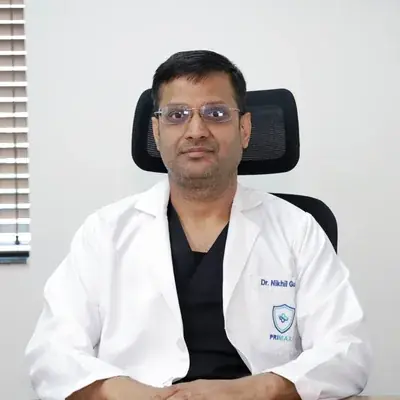
— Dr. Nikhil Gupta, Academic Director, Solace Training Academy
If you are ready to train the right way, enquire about the next available batch or view our upcoming workshop schedule.
Related articles
Ready to train?
Tell us which program you are interested in — we respond within 24 hours.